
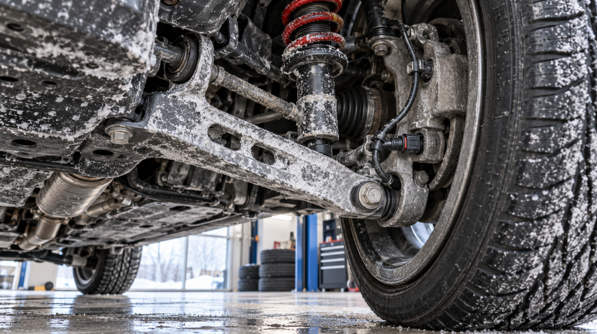
A white crust on the rocker panels is an obvious reminder of a Montreal winter. Less visible is the salty moisture carried into wheel wells, wiring looms and connectors beneath the car. Drivers often associate corrosion with body panels and subframes, yet electrical faults can appear long before rust becomes structurally serious.
These problems are particularly frustrating on modified vehicles. Lower suspension, relocated modules, aftermarket lighting and added sensors can leave wiring closer to road spray or dependent on connections that were never sealed to factory standards. The first symptom may be an occasional warning light rather than visible corrosion.
Salt Water Finds the Weak Connection
Road salt does not need to reach a control module directly. Moisture can enter a connector through a damaged seal, travel along a wire beneath its insulation or settle around a ground point. Salt increases the conductivity of the water, allowing corrosion to develop on exposed metal terminals.
Several areas deserve attention after a hard winter:
- wheel-speed sensor connectors near the hubs;
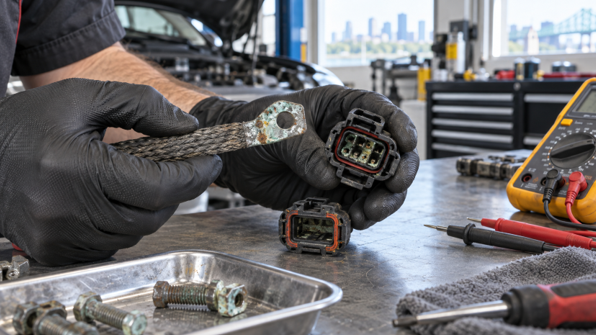
- ground straps between the engine, body and battery;
- starter and alternator cables mounted low in the engine bay;
- trailer wiring and aftermarket lighting connections;
- wiring routed through wheel arches or beneath side skirts.
A corroded terminal creates resistance. The affected circuit may still work during a workshop inspection but fail when vibration, temperature or moisture changes. This explains why some cars show an ABS warning only after driving through slush or refuse to start on one cold morning before behaving normally later.
Small Conditions Can Change the Result
Minor details also matter when an online promotion is activated. A comparison page at https://online-casinosaustralia.com/minimum-deposit-casino/ presents casino bonuses connected with lower starting deposits. Before claiming one, an account holder still needs to check the qualifying payment, minimum deposit, wagering conditions and expiry period. A larger headline amount does not necessarily create better value when its requirements are restrictive.
Electrical diagnosis follows a similarly disciplined principle: the visible component is not always the source of the fault. Replacing an ABS sensor will not repair resistance inside its connector. Installing a stronger battery will not correct a poor engine ground. Parts swapping becomes expensive when the circuit has not been tested first.
A fault-code scan provides a useful starting point, but the code identifies the circuit that reported a problem rather than automatically naming the failed part. Voltage-drop testing under load can reveal resistance that a simple continuity check misses.
Modified Cars Add More Entry Points
Factory connectors are selected for a particular location and exposure level. Problems begin when modifications disturb that protection. A wire passed through an unprotected hole can chafe against metal. A connector intended for the cabin may not survive behind a bumper. Crimp terminals can admit moisture when the wrong tool or connector size is used.
Aftermarket installations should be checked for:
- intact grommets wherever wiring crosses a metal panel;
- sealed connectors in exposed areas;
- properly supported looms that cannot rub against suspension parts;
- clean ground points secured to bare metal;
- fuses positioned close to the power source;
- drip loops that keep water away from electrical housings.
Dielectric grease can help protect an appropriate connector, but it is not a repair for badly damaged terminals. Heavy application may also prevent a connector from seating correctly. Green deposits, weakened pins or swollen wiring often require terminal replacement and removal of the contaminated section.
Washing Helps When It Reaches the Right Places
Regular washing reduces the time salt remains against the vehicle. To limit corrosion on damaged or unpainted metal, CAA-Quebec recommends washing cars during winter, when salt and grime readily accumulate.
A quick pass over the paint is not enough. Wheel wells, the rear subframe area and accessible sections of the underbody collect concentrated residue. Washing is most useful on a milder day when water can drain and doors, locks and seals are less likely to freeze.
Pressure should be used carefully around exposed connectors, damaged seals and aftermarket components. Forcing water directly into a questionable connection can create the fault the wash was intended to prevent. A controlled rinse is preferable to holding a high-pressure nozzle close to wiring.
Spring Inspection Prevents Summer Faults
A spring inspection should cover more than tires, brakes and fluid levels. Warning lights stored during winter, slow cranking, flickering lamps and intermittent accessories deserve investigation even when they have apparently corrected themselves.
Electrical corrosion rarely improves without intervention. Once moisture has entered a connection, heat cycles and vibration can gradually worsen the resistance. Finding a compromised ground strap or connector in April is far easier than tracing an intermittent failure beside the road in July.
Montreal’s winter leaves plenty of visible evidence on a car. The expensive damage, however, may be hiding behind a rubber seal or beneath a bolt that still looks secure. Clean wiring routes, sound connections and methodical testing give modified cars a much better chance of reaching the next season without electrical surprises.
AI unique image