
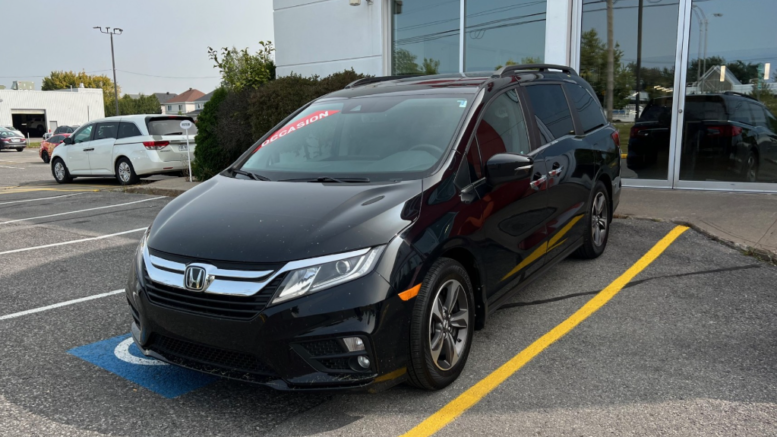
Leasing a used car in Canada is possible — and for the right driver, it can be one of the more financially efficient ways to get behind the wheel of a quality vehicle. The monthly payments are lower than leasing new, the upfront commitment is minimal, and the short term keeps options open. The catch is that used car leases remain a niche product: they aren’t widely advertised, not every dealership offers them, and the programs that do exist come with eligibility criteria that narrow the field considerably.
Yes, You Can Lease a Used Car — Here’s How It Works
Leasing a used car is possible in Canada, though it remains less common than leasing new — and far less advertised. Most programs are built around certified pre-owned (CPO) vehicles sold through manufacturer-authorized dealerships. The mechanics are identical to a standard lease: you pay for the depreciation of the vehicle over the lease term, return it at the end, and walk away (or buy it out). The main difference is that you start with a car that has already absorbed the steepest portion of its depreciation curve, which directly reduces your monthly cost.
What Makes a Used Car Eligible for Leasing?
Lenders and manufacturers apply strict filters before approving a car for a lease program, primarily to limit their risk on residual value:
- Age: most programs cap vehicles at 4 to 6 model years old at the time of signing
- Mileage: odometer readings above 80,000 to 100,000 km are generally disqualifying
- Condition: a clean vehicle history report (Carfax or equivalent) is standard
- Inspection: the vehicle must pass a manufacturer-certified multi-point inspection before entering a CPO lease program
- Ownership structure: the vehicle must be sold through an authorized dealership, not a private seller
Manufacturer CPO programs typically restrict lease eligibility to lower-mileage models fewer than 4 years old, partly because predicting depreciation becomes harder as a vehicle ages. Outside of that window, residual value projections become too unreliable for lenders to price the lease confidently.
Certified Pre-Owned vs. Standard Used: What’s the Difference?
| Criteria | Certified Pre-Owned (CPO) | Standard Used |
| Inspection | Multi-point (100 to 175 points) | None required |
| Warranty | Extended manufacturer warranty | As-is or dealer warranty only |
| Lease eligibility | Yes, through most major brands | Rare — few lenders participate |
| Interest rate (money factor) | Lower | Higher |
| Price | Higher than non-certified used | Lower upfront cost |
How Does a Used Car Lease Work in Canada?
The structure of a used car lease follows the same logic as a new car lease — you pay for depreciation over a set term, not the full vehicle value. What changes is the starting point: a used vehicle has already shed its steepest depreciation, which shifts the financial equation in the lessee’s favour.
Key Terms to Understand Before You Sign
Lease agreements carry terminology that dealerships rarely explain unprompted.
- Capitalized cost (cap cost): the negotiated selling price of the vehicle — your starting figure, and the one you should always push to reduce
- Residual value: the projected worth of the vehicle at lease end, set by the lender; the higher this number, the lower your monthly payment
- Money factor: the lease equivalent of an interest rate, expressed as a decimal (e.g. 0.00250); multiply by 2,400 to convert to an annual percentage rate
- Disposition fee: a charge payable at lease end if you return the vehicle without purchasing or re-leasing; typically between $300 and $500 on used leases
- Acquisition fee: an upfront administrative fee charged by the lender to set up the lease agreement
On used car leases specifically, money factors tend to run higher than on new vehicles — in the range of 0.00300 or above, versus 0.00100 to 0.00200 on manufacturer-incentivized new leases.
How Monthly Payments Are Calculated on a Used Lease
The monthly payment on a used car lease breaks down into two core components: a depreciation charge and a finance charge, plus applicable taxes.
The formula works as follows:
- Depreciation charge = (Cap cost − Residual value) ÷ Lease term in months
- Finance charge = (Cap cost + Residual value) × Money factor
- Monthly base payment = Depreciation charge + Finance charge
- Total monthly payment = Base payment + applicable tax (e.g. HST in Ontario at 13%, applied to the monthly payment only — not the full vehicle value)
For example, a used vehicle with a cap cost of $28,000, a residual value of $16,000, and a money factor of 0.00300 over 36 months would produce a depreciation charge of $333/month and a finance charge of $132/month, for a pre-tax base of $465/month. Tax is then applied to that figure, not to the $28,000.
Typical Lease Terms and Mileage Allowances
Used car leases in Canada generally run on shorter terms than new vehicle leases, reflecting the tighter residual value window.
| Parameter | Typical Range (Used Lease) | Typical Range (New Lease) |
| Lease term | 24 to 36 months | 36 to 48 months |
| Annual mileage allowance | 16,000 to 20,000 km | 20,000 to 24,000 km |
| Excess mileage fee | $0.10 to $0.20/km | $0.10 to $0.15/km |
| Down payment required | Often $0 to $2,000 | $0 to $5,000+ |
Mileage caps on used leases tend to be tighter, since lenders price residual values conservatively on older vehicles. Exceeding the allowance by even 5,000 km can add $500 to $1,000 to your end-of-lease bill — a cost worth factoring in before signing.
Benefits of Leasing a Used Car vs. Buying or Leasing New
Leasing a used car sits at the intersection of two options most Canadians consider: leasing new and buying used. It combines the lower monthly commitment of a lease structure with the reduced sticker price of a pre-owned vehicle. The result is a financing arrangement that makes financial sense for a specific type of driver — one who prioritizes monthly cash flow over long-term equity.
Lower Monthly Payments
The most direct advantage of leasing a used car is the reduction in monthly outlay compared to both leasing new and financing used.
When you lease, you pay only for the depreciation that occurs during your lease term — not the full vehicle value. On a used car, the steepest depreciation has already happened. A vehicle that originally retailed at $45,000 and is now valued at $28,000 on the lot means you’re financing a much smaller depreciation spread than a buyer leasing the same model new off the lot.
To put numbers on it: leasing a 3-year-old CPO SUV priced at $28,000 over 24 months will generally produce a monthly payment 30 to 40% lower than leasing the equivalent new model — with no difference in your day-to-day driving experience.Those savings add up quickly, and many Canadians reinvest the difference into other areas of their budget, from travel to entertainment on platforms like these.
Access to Better Vehicle Trim Levels for Less
A used lease on a higher-trim CPO vehicle with leather seating, a panoramic roof, and advanced driver assistance systems can land at the same monthly figure as a stripped-down new lease on the entry-level version. This dynamic is particularly relevant in the Canadian market, where the average new vehicle price reached $67,817 in 2024, pushing many buyers toward lower trim levels to manage costs.
| Scenario | Vehicle | Monthly Payment (est.) |
| New lease, base trim | 2025 Toyota RAV4 LE | $550–$620/month |
| Used lease, higher trim | 2022 Toyota RAV4 XLE Premium (CPO) | $380–$450/month |
| Used financing | 2022 Toyota RAV4 XLE Premium | $520–$580/month |
Flexibility at the End of the Lease Term
A used car lease typically runs 24 to 36 months — shorter than the 48-month average for new leases in Canada. That compressed timeline translates into a faster decision point: return the vehicle, buy it out at the pre-set residual value, or move to another lease.
For drivers whose circumstances change frequently — relocation, family size, remote work arrangements that affect commute distances — this shorter cycle is a practical advantage. There’s no vehicle to sell privately, no trade-in negotiation, and no depreciation risk to absorb.
What Are the Downsides of Leasing a Used Car?
The financial appeal of a used car lease is real, but it comes with trade-offs that aren’t always disclosed upfront. Understanding the limitations before signing protects against end-of-lease surprises — some of which can cost more than the monthly savings generated throughout the term.
Limited Availability and Vehicle Selection
Used car leasing remains a niche product in Canada. Most programs are tied to manufacturer CPO inventories at authorized dealerships, and participation varies widely by brand, region, and market conditions. When used vehicle supply tightens — as it did significantly between 2021 and 2023 following the global chip shortage — CPO lease availability contracts along with it.
In practical terms, this means you’re choosing from whatever happens to be on the CPO lot at a given dealership, in a specific colour, trim level, and configuration. Unlike leasing new, where factory orders or dealer transfers are possible, a used lease locks you into existing inventory. Shoppers in smaller markets or rural areas may find that local CPO lease options are limited to a handful of vehicles at any one time.
Warranty Coverage: What’s Included and What’s Not
Warranty coverage on a used lease depends on two overlapping timelines: what remains of the original manufacturer’s warranty and what the CPO program adds on top.
| Warranty Type | Typical Coverage | Notes |
| Original manufacturer warranty | 3 years / 60,000 km (bumper-to-bumper) | May already be partially or fully used up |
| CPO extended powertrain warranty | Up to 7 years / 100,000–160,000 km | Varies significantly by brand |
| CPO bumper-to-bumper extension | 1 to 2 years after original expiry | Not offered by all manufacturers |
| Lease term beyond warranty | Not covered — lessee pays repairs | A real risk on 36-month leases |
The key risk on a used lease is a gap between the end of warranty coverage and the end of the lease term. If the original warranty expires at month 20 of a 36-month lease, the remaining 16 months expose you to out-of-pocket repair costs on a vehicle you don’t own. Verifying exact warranty end dates before signing is non-negotiable for maximum security.
Mileage Caps and Wear-and-Tear Fees to Watch Out For
Mileage allowances on used car leases run tighter than on new leases, and the penalties for exceeding them are the same regardless of vehicle age. Most used lease agreements in Canada set annual kilometre limits between 16,000 and 20,000 km. Excess mileage fees typically land between $0.10 and $0.20 per kilometre — meaning a 10,000 km overage costs $1,000 to $2,000 at lease return.
Wear-and-tear standards apply equally strictly. Dents larger than a specific diameter, tire wear below a minimum tread depth, interior stains, and windshield chips beyond minor thresholds all trigger additional charges. On a vehicle that already had some pre-existing wear when you received it, documentation at the start of the lease — photos, a written condition report — is the only protection against being billed for damage you didn’t cause.
Who Should Consider Leasing a Used Car in Canada?
A used car lease suits a specific type of driver. It delivers real value when the profile matches the product — and creates friction when it doesn’t. Before committing to any lease agreement, two questions clarify whether the arrangement actually fits: how comfortable are you with structured, contractual vehicle use, and what matters more to you — monthly cash flow or long-term asset building?
Is It a Good Option for First-Time Lessees?
A used car lease can work well as a first lease experience, though it comes with a steeper learning curve than leasing new. Manufacturer CPO programs on used vehicles carry the same contractual structure as new leases — the same kilometre caps, wear-and-tear standards, and end-of-lease obligations — but without the promotional money factors and manufacturer incentives that make new leases more straightforward to price.
That said, the format suits first-time lessees who fall into one of these situations:
- Budget is the primary constraint and a new lease payment isn’t manageable
- The driver has predictable, moderate annual mileage (under 18,000 km/year)
- The goal is a 2 to 3 year commitment with a clearly defined exit — no intention to own long-term
- The vehicle will be used primarily for commuting or city driving, where condition is easier to control
Leasing Used vs. Financing Used: Which Makes More Sense?
The choice between leasing and financing a used car comes down to three variables: monthly budget, total cost over time, and what you want at the end of the term. Neither option is universally better — the right answer depends on how long you plan to keep the vehicle and how you prioritize cash flow versus equity.
| Criteria | Lease a Used Car | Finance a Used Car |
| Monthly payment | Lower (30–50% less on average) | Higher |
| Upfront cost | Low — often under $2,000 | Typically 10–15% down payment |
| Kilometre limits | Yes — 16,000 to 20,000 km/year | None |
| End of term | Return, buy out, or re-lease | Vehicle is yours outright |
| Long-term cost | Higher if you keep leasing | Lower once loan is paid off |
| Equity built | None | Yes — grows with each payment |
| Modification allowed | No | Yes |
| Best for | Short-term, predictable use | Long-term ownership and flexibility |
Financing wins on total cost if you hold the vehicle for five or more years after the loan is paid off. Leasing wins on monthly affordability and flexibility, particularly for drivers who don’t want the responsibility of resale. For used vehicles specifically, financing often makes strong financial sense — you absorb less depreciation risk than on a new purchase, and ownership equity accumulates from day one.
How to Find Used Car Leases in Canada
There’s no banner on a manufacturer’s homepage promoting a CPO lease special, and most dealership staff won’t raise the option unprompted.
Which Brands and Dealerships Offer Used Car Leases?
CPO leasing programs vary significantly by manufacturer. Some brands have structured, national programs; others leave it entirely to individual dealerships to arrange financing. The brands with the most established CPO lease infrastructure in the Canadian market include BMW, Lexus, Buick, Cadillac, Chevrolet, Honda, and Acura. Luxury brands tend to offer the most consistent programs, since their CPO vehicles retain enough value to make residual pricing predictable.
Beyond manufacturer programs, two other channels give access to used car lease arrangements:
- Lease takeover platforms: Sites like LeaseCosts Canada and SparkLease list existing leases that current lessees want to transfer. Taking over a lease means assuming the remaining term, mileage allowance, and monthly payments — often with no down payment required and sometimes with cash incentives from the original lessee eager to exit
- Independent dealerships: A smaller number of non-franchise dealers arrange used leases through third-party lenders, though money factors are typically higher and warranty coverage less comprehensive than manufacturer CPO programs
The most reliable starting point remains the CPO inventory section of a manufacturer’s website. Calling the dealership directly to ask whether CPO leasing is available — rather than assuming it is — saves time and avoids disappointment.
What to Look for in a Used Car Lease Agreement
Once a deal is on the table, the lease agreement itself deserves line-by-line review before signing. Several terms carry financial consequences that aren’t visible in the monthly payment figure.
The points that warrant the closest scrutiny are:
- Exact warranty expiry date: confirm when coverage ends relative to the lease term end date — any gap is your financial exposure
- Money factor: ask for it explicitly and convert to APR (multiply by 2,400) to benchmark it against financing rates
- Capitalized cost: this is negotiable, just as a purchase price would be — a lower cap cost reduces every monthly payment
- Kilometre allowance and overage rate: calculate your realistic annual driving distance before accepting the stated limit
- Disposition fee: confirm the amount charged at lease return if you don’t buy or re-lease
- Condition assessment process: ask who conducts the end-of-lease inspection and what standards apply — manufacturer-run programs are generally more consistent than dealer-led assessments
- Purchase option terms: confirm whether you have the right to buy at the stated residual value and under what conditions that right can be exercised
Frequently Asked Questions About Leasing a Used Car in Canada
What is the maximum age of a car you can lease used?
Most manufacturer CPO lease programs in Canada cap eligibility at 4 to 6 model years old at the time of signing. Beyond that threshold, residual values become too unpredictable for lenders to price the lease reliably. A vehicle from the 2021 model year, for example, remains eligible for most programs in 2026, while a 2018 model typically would not. Some independent lenders apply looser criteria, but their money factors are proportionally higher to offset the added risk.
Can you lease a used car with bad credit in Canada?
It is possible, though options narrow considerably. Manufacturer CPO lease programs generally require good to excellent credit — a score in the 650 to 700 range at minimum, with the best rates reserved for scores above 720. Applicants with weaker credit profiles may still qualify through certain independent dealerships or subprime lenders, but the money factor applied will be significantly higher, which can offset much of the monthly savings a used lease would otherwise provide. A co-signer with strong credit is one practical way to access better terms in that situation.
Is it possible to buy the car at the end of a used lease?
Yes. The vast majority of used car lease agreements in Canada include a purchase option at lease end. The buyout price is the residual value set at the start of the lease — the same figure used to calculate monthly payments. If market conditions shift during the lease term and the vehicle’s actual value exceeds the stated residual, buying out the lease can represent genuine value. That said, the decision should factor in any remaining warranty coverage, the vehicle’s condition, and how the buyout price compares to comparable used market listings at the time.