
When we think back to some of the most dramatic and unpredictable races in recent Formula One history, Interlagos 2008 springs to mind. As does Abu Dhabi 2021. Other races at tracks, such as Silverstone, are exhilarating spectacles due to the “classic British summer”. The circuit was also the scene of Nico Hülkenberg’s maiden podium after 239 races. Elsewhere, there have been shock wins for Esteban Ocon and Pierre Gasly at the Hungaroring and Monza, respectively.
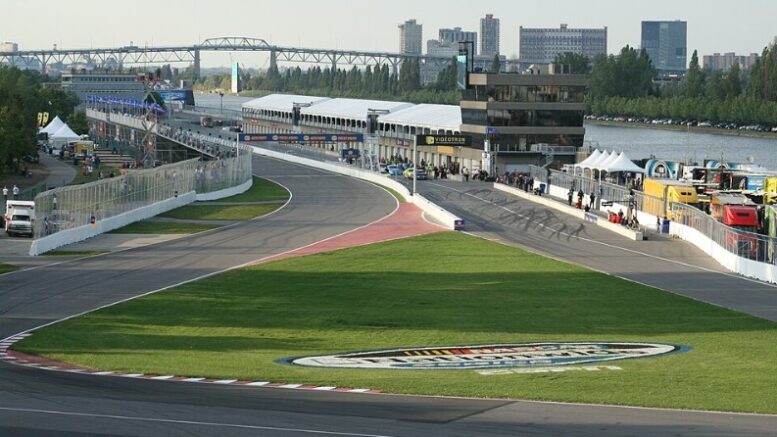
However, one track that is predictably unpredictable is located on Île Notre-Dame in Montreal. The Circuit Gilles Villeneuve found on the island on St. Lawrence River is recognised as one of the most exciting races of the F1 calendar due to the thrills and spills thrown up each season on the 4.361km racetrack. But what is it about the track that produces unpredictable races each season?
Circuit Design
Firstly, Circuit Gilles Villeneuve is a track that belongs to the old-school catalogue of Formula 1 circuits, unlike more recent additions to the F1 calendar in Qatar and Saudi Arabia, which have become part of modern Formula 1 betting coverage. The layout of the track combines the characteristics of a street circuit with high-speed straights and heavy braking points.
Close-in walls, including the “Wall of Champions” on the final corner, can catch out even the best drivers (hence the name), and if you throw a handful of chicanes, a U-turn, a pit lane that funnels out into turn two, and a narrow first corner into the mix, race fans have the recipe for excitement. The circuit tests the full range of ability built into a car with varying degrees of downforce required at various stages of the track. Jeopardy is at nearly every turn.
Mysterious Montreal Weather
One of the factors that guarantees unpredictability is the weather. And Montreal has a good knack of conjuring up the worst kind on race day. Once the clouds open, keeping the car between the white lines suddenly becomes much trickier while a timely pit stop or safety car can slingshot a driver right up the grid.
The unpredictability caused by wet weather was epitomised by Jenson Button in 2011 when the Brit, driving for McLaren, endured one of the most topsy-turvy races in F1 history to emerge victorious, over four hours after the lights had originally gone out.
After collisions with teammate Lewis Hamilton and Fernando Alonso, a drive-through penalty for speeding under the safety car, a puncture, six pit stops altogether, and a two hour rain delay, Button showcased his quality to pressurise Sebastian Vettel into a mistake on the final lap to win the race, having been right at the back of the pack at the halfway point.
Magical Montreal until 2035
The unpredictability is set to continue for another decade after the circuit agreed a four-year extension with Liberty Media to keep its place on the calendar. The news delighted racing fans who do not need an excuse to visit one of the most vibrant cities in the world. And on the track, the challenging nature of the circuit and the skies above will keep fans guessing as to who will take the chequered flag.